
Services
Digitising
Digitising
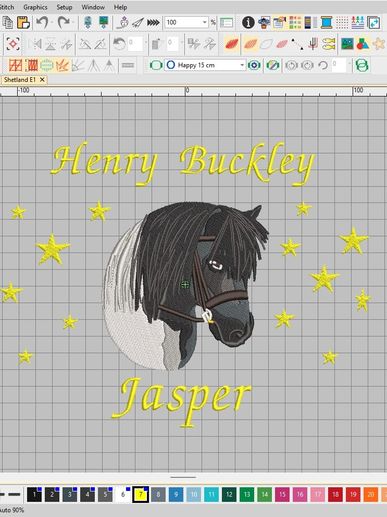
Digitising a logo for embroidery is the process of converting existing artwork like a company logo or team emblem into a stitch file that an embroidery machine can sew on a garment. Before any design can be embroidered, it must be digitised. Digitising is a complex process that is both art and science.
Our team at Logos2go plot the points of your design for our embroidery machine to read. We determine how dense the stitches should be, the sequence in which the design runs the best and the type of stitches to use. Simply changing the direction the thread is sewn can give your logo dimension and make your designs really pop out.
Art Work Requirements
Just send us the best quality image you have in any format and we will do the rest.
Embroidery
Digitising

Here at Logos2go we believe in quality at competitive prices. We use the latest product leaders when it comes to embroidery from the machines and threads we use to the garments we offer.
For our embroidery machines we use Happy which is a world market leader for industrial embroidery machines. Happy can support up to 15 needles meaning we can embroider 15 different colours at any one time giving us the ability to embroider complex designs which others simply cannot reproduce.
For our threads we use Madeira which again is the world market leader for all machine embroidery threads. Madeira work with pantone colours which help us create the exact colour reproduction of any logo and design. All threads produced by Madeira carry the world class 1 OEKO-Tex certification - No dangerous or banned substances. These threads can also be used to on baby garments and are fire resistant and come from sustainable sources.
Artwork Requirements
Just send us the best quality image you have in any format and we will do the rest.
Direct To Film Transfer Printing
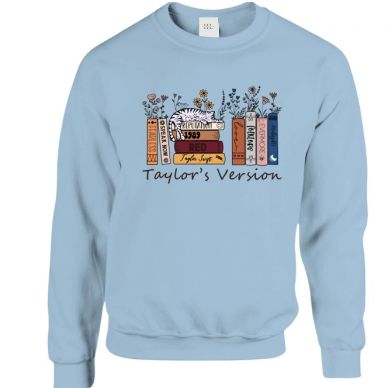
DTF Heat Transfers are vibrant, durable, stretchy with rebound and no cracking, with brilliant colours and epic bright whites. Direct to Film Heat Transfers are made with eco-friendly water-based inks which provide great washability, breathability, with a very soft handle
- Unlimited colour options
- Stretch and rebound - no cracking
- Soft finish makes them feel like part of the garment
- 60+ Washes – The NEW industry standard
- Test washed a Gildan Ultra Cotton T-Shirt 120 times - T-Shirt has faded - logo looking as good as the day it was applied
- Great for fine detail
- Eco-Friendly Water-Based DTF Transfers
Transfer is the process of printing your designs onto a special, transferable vinyl material. .
Artwork Requirements
High Resolution Vector images with background removed. Not sure and need help with your artwork? Contact us we assist you.
CAD Cut Vinyl Printing
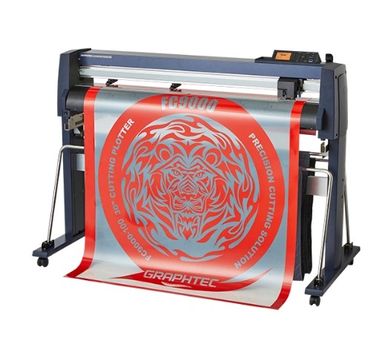
A major advantage of vinyl printing is that there are minimum setup costs involved allowing for short print runs at a very reasonable price. It is also very versatile and can be used on virtually all types of products including personalised t shirts, polo shirts, work shirts, bags, caps, workwear and lots more. If you have any doubts then simply ask our staff and we’ll give you advice.
CAD Cut vinyl is one of the most commonly used printing techniques when you’re looking to get printed sportswear. That’s right, all the names and numbers that you see printed on the back of your favorite football players shirt was printed using the CAD Cut vinyl printing technique. In fact, CAD Cut vinyl is the most widely used printing technique across all sports, so no matter which sport you love, chances are that CAD Cut vinyl plays a part.
The different types of vinyl allow for different specialist effects that your designs can be made from or that could be added to certain elements of your design to make it stand out from the rest.
Artwork Requirements
For lettering all we need is your Text and the Font style. Images need to be simple shapes similar to Clipart or Silhouette types.
For more complex designs we would use DTF.
Sublimation Printing
Sublimation Printing

Sublimation printing is a process that uses heat to transfer dye onto materials like fabric, ceramics, or metal, creating vibrant, long-lasting designs. Unlike traditional printing methods, sublimation allows for full-color, high-quality images that become part of the material, ensuring durability and resistance to fading.
This process works best on white or light coloured items, garments are usually polyester based to react with the dyes.
This is also a perfect process for personalising mugs which we supply pre-coated with a reactive film.
Artwork
Sublimation Printing
Vector Files
What is a Vector File?
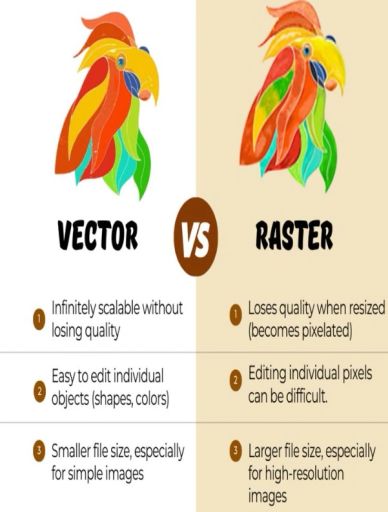
Unlike raster images (JPG, PNG), which are made of pixels, vector files use mathematical paths to define shapes, text, and colors. This makes them resolution independent meaning they stay sharp whether on a business card or a billboard.
Common Vector File Types
- AI (Adobe Illustrator): Native Illustrator format; editable and widely used in design studios.
- EPS: A universal format, easily shared with printers and vinyl cutters.
- SVG: Scalable and web-friendly; ideal for digital and print crossover use.
- PDF: Often vector-based when exported correctly; check settings before sending to print.
Not sure if your logo or image is a vector? Send it to us and we can assist you.